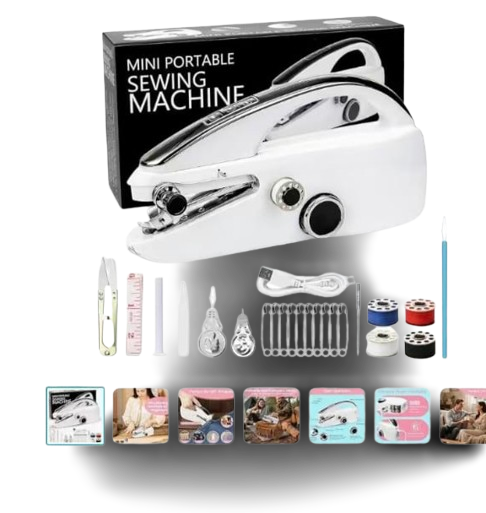
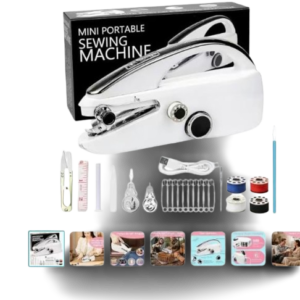
Mini Sewing Machine
What Is a Mini Sewing Machine?
A mini sewing machine is a compact and lightweight version of a traditional sewing machine designed for basic sewing, repairs, alterations, and small crafting projects. Its portable size makes it ideal for beginners, hobbyists, and users with limited workspace.
How It Works
A mini sewing machine uses a motor-driven needle and thread system to stitch fabric together. The user guides the material beneath the needle while the machine forms stitches using upper and lower threads. Most models offer simple controls for stitching and speed adjustment.
Main Benefits
Compact and space-saving design.
Easy to transport and store.
Suitable for quick repairs and alterations.
Beginner-friendly operation.
Lower cost than full-size sewing machines.
Convenient for small crafting projects.
Key Features to Consider
Stitch options and sewing capabilities.
Adjustable sewing speeds.
Built-in lighting.
Reverse stitching function.
Foot pedal compatibility.
Fabric thickness support.
Automatic thread winding.
Portability and overall weight.
Where You Can Use It
Home sewing rooms.
Apartments and small living spaces.
Craft workshops.
Schools and learning environments.
Travel and temporary workstations.
DIY and hobby projects.
Battery and Charging
Many mini sewing machines operate using an AC power adapter, while some models can also run on batteries for portable use. Battery-powered versions offer flexibility when electrical outlets are unavailable, making them useful for travel and on-the-go repairs.
Ease of Use
Mini sewing machines are designed with simplicity in mind. Most feature straightforward controls, quick threading systems, and lightweight construction, making them suitable for beginners and occasional users.
Maintenance Tips
Clean lint and dust after each use.
Replace needles when worn or damaged.
Keep moving parts lightly lubricated if recommended.
Use high-quality thread for smoother operation.
Store in a clean, dry location.
Check thread tension regularly for consistent stitching.
Pros and Cons
Pros
Lightweight and portable.
Easy to learn and operate.
Affordable for beginners.
Requires minimal storage space.
Ideal for quick repairs and simple projects.
Cons
Limited power compared to full-size machines.
May struggle with thick fabrics.
Fewer stitch options.
Smaller working area.
Not ideal for large-scale sewing projects.
Who Should Buy It
Beginners learning to sew.
Students and hobbyists.
Apartment dwellers with limited space.
Travelers needing a portable sewing solution.
Anyone looking for a machine for basic repairs and alterations.
Final Thoughts
A mini sewing machine is a practical and affordable tool for everyday sewing needs. Its compact design, ease of use, and portability make it an excellent choice for beginners, hobbyists, and anyone seeking a convenient solution for simple sewing projects and clothing repairs.
Reviews
There are no reviews yet.